Differences Between High-Deck, Normal-Deck, and Low-Deck Buses: Which Is Right for Your Operational Needs?
Published on : 12 November 2026
|
Last updated : 16 November 2026
|
Choosing a bus fleet involves more than just passenger capacity or exterior design. The floor configuration, or deck height, also affects passenger comfort, accessibility, luggage capacity, and the vehicle’s suitability for specific operating routes.
Generally, there are three commonly used types: high-deck (high-floor), normal-deck, and low-deck buses. Each has distinct characteristics and serves different purposes. So, which one best suits your needs?
What Is a Bus Deck?
A bus deck refers to the position or height of the passenger cabin floor relative to the road surface. Differences in floor height can affect how easily passengers board and alight, luggage capacity, and cabin design.
Understanding the different deck configurations therefore helps operators select buses that best meet their route and operational requirements.
Types of Bus Decks
1. High-Deck Buses
High-deck buses (high-floor buses) have elevated passenger cabin floors, allowing for larger luggage compartments underneath the vehicle.
This type of bus is generally suitable for long-distance travel, tourism, and intercity services because it offers greater luggage storage capacity.
However, the higher floor means passengers must climb more steps when boarding and alighting.
2. Normal-Deck Buses
Normal-deck buses have a relatively standard floor height, offering a balance between luggage space, passenger comfort, and accessibility.
This configuration is versatile enough for various transportation needs, including medium-distance travel, shuttle services, and certain intercity routes.
3. Low-Deck Buses
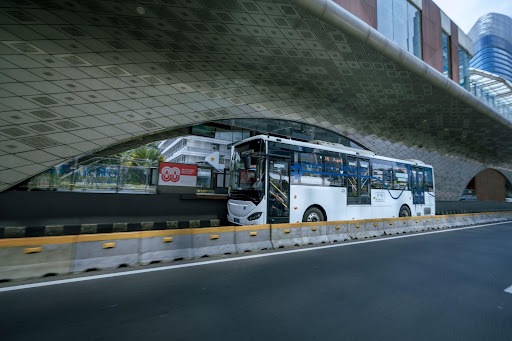
Low-deck buses have passenger cabin floors positioned closer to the road surface, making it easier for passengers to board and alight.
Because of this characteristic, low-deck configurations are widely used in electric buses and Bus Rapid Transit (BRT) systems in urban areas with frequent stops.
Comparing High-Deck, Normal-Deck, and Low-Deck Buses
| Bus Type | Key Advantages | Suitable Applications |
| High Deck | Larger luggage compartments and elevated cabin floors | Intercity travel, tourism, and long-distance journeys |
| Normal Deck | A balance of accessibility, comfort, and luggage capacity | Shuttle services and medium-distance travel |
| Low Deck | Easier and more convenient passenger boarding and alighting | City buses, BRT systems, and mass transit |
invi Bus Solutions for Different Operational Needs
invi offers a range of electric bus solutions in Indonesia that can be tailored to different operational requirements.
Urban Mobility
For urban transportation, vehicles with low-floor configurations are generally more suitable because they facilitate faster passenger boarding and alighting.
Fleet options such as the Higer 12M High Deck can also serve urban mass transportation needs.
BRT and Mass Transit
BRT bus operations require vehicles with high passenger capacity, convenient accessibility, and reliable operational support.
When selecting an electric bus, operators should also consider driving range, battery capacity, charging requirements, and route characteristics.
Intercity Travel
For long-distance journeys, coach buses can be an ideal option because they prioritize passenger comfort and luggage storage capacity.
The Higer 12M Electric Coach Bus is worth considering for intercity transportation, corporate transport, and tourism services.
Choose the Right Fleet with invi
Selecting a high-deck (high-floor), normal-deck, or low-deck bus should depend on route conditions, passenger capacity, stop frequency, luggage requirements, and operational patterns.
For electric fleets, these requirements must also be supported by EV charging station infrastructure, after-sales services, and proper operational planning.
As an integrated commercial EV solutions provider, invi supports the transition to electric transportation through vehicles, charging infrastructure, and operational support, helping accelerate the adoption of electric buses in Indonesia.